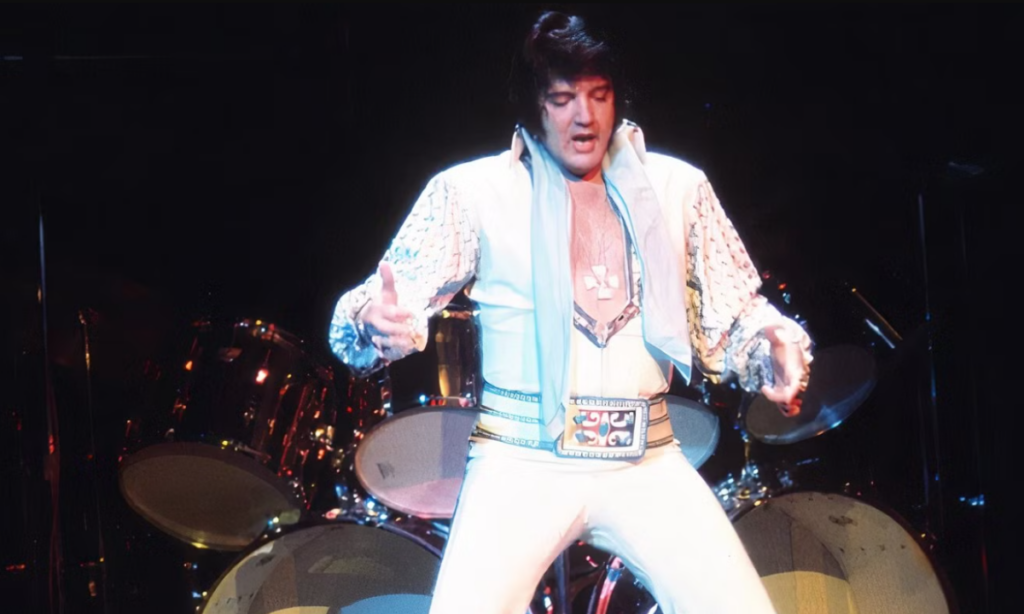
The Real Story Behind Elvis Presley’s Death: A Life Lived in Pain, Not Excess
On August 16, 1977, the world was stunned by the news that Elvis Presley had died. News reports quickly offered a simple explanation: a sudden heart attack. For fans across the globe, the loss felt shocking and cruelly abrupt. But the truth behind Elvis Presley’s death is far more layered, personal, and tragic than the headlines ever revealed.
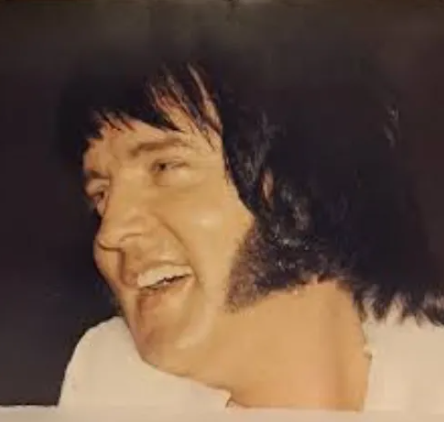
Elvis did not pass away suddenly in a single moment. He spent much of his life battling intense physical pain that worsened over time and ultimately overwhelmed his body.
From birth, Elvis lived with a serious medical condition that few outside his inner circle fully understood. He was born with a twisted colon, a congenital abnormality that caused severe digestive problems, chronic constipation, and recurring abdominal pain. This was not a minor health issue—it was a lifelong condition that became increasingly debilitating as he grew older.
During the 1970s, medical knowledge of gastrointestinal disorders was limited, and treatment options were far less advanced than they are today. Pain management at the time relied heavily on prescription medications, often without a full understanding of long-term risks or drug interactions.
In the weeks before his death, Elvis’s health had deteriorated significantly. The autopsy later revealed severe bowel impaction, a condition that likely developed over several weeks. This type of medical crisis causes intense, unrelenting pain—pain that affects not only the body, but the mind itself. Anyone who has experienced similar conditions understands that this is not discomfort that can be ignored or endured quietly.
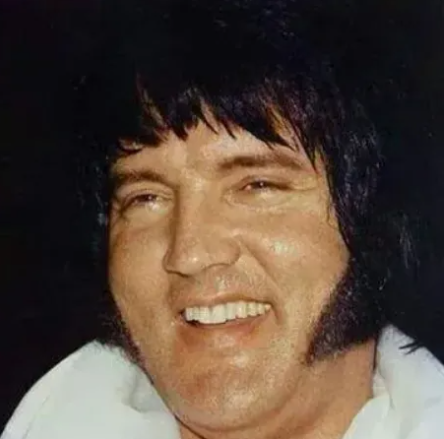
Yet even as his pain intensified, Elvis continued to work. He rehearsed, made plans, and prepared for another tour that was scheduled to begin the very next day. This detail is crucial. It challenges the idea that Elvis had lost hope or surrendered to despair. He was still looking forward, still planning, still trying to move ahead.
To manage his pain, Elvis relied on medication prescribed by doctors. Over time, this reliance became the dominant narrative surrounding his death, often reduced to simplistic claims of excess or addiction. But such interpretations ignore a critical reality: chronic pain changes everything.
When pain becomes constant and unbearable, survival takes priority over long-term thinking. The focus narrows to a single need—relief. Not tomorrow. Not reputation. Just making the next hour tolerable.
On his final day, Elvis took more medication than usual. Not because he wanted to die. Not because he was reckless. But because the pain had reached a level he could no longer withstand. At the time, neither patients nor physicians fully understood how dangerous the combined effects of multiple prescriptions could be. Elvis trusted the medical advice he was given. Tragically, that trust failed him.
Yes, he needed the medication.
Yes, he took too much.
But this was not indulgence—it was desperation driven by suffering.
Portraying Elvis Presley’s death as a moral failing or personal weakness overlooks the realities of chronic illness. Severe, ongoing pain alters judgment, behavior, and perception. When pain dominates every moment, thoughts of legacy or consequence disappear. Survival becomes the only goal.
Despite his condition, Elvis continued to give everything he had to his music and his fans. He performed through pain, showed up despite exhaustion, and carried the weight of global fame while privately struggling with physical suffering few ever saw.
Behind the rhinestones, applause, and larger-than-life image was a man quietly enduring.
The real tragedy of Elvis Presley’s death is not only that he died young, but that his pain was misunderstood for decades. Public discussion focused on spectacle instead of empathy, judgment instead of context.
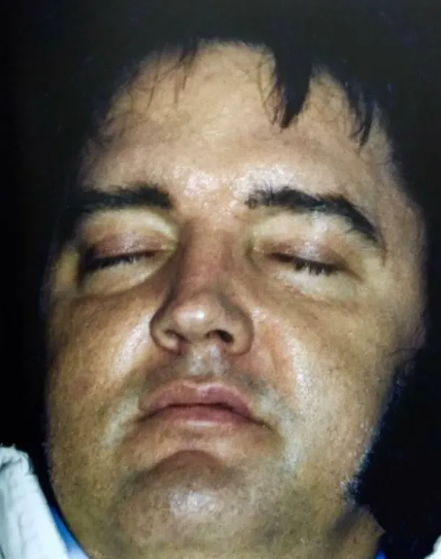
Elvis was not a cautionary tale.
He was a human being living with a serious medical condition that even modern medicine still struggles to manage. He lived in an era when pain treatment depended heavily on pharmaceuticals and when patients were rarely warned about long-term risks. He trusted doctors. He trusted the system. In the end, it was not enough to save him.
Perhaps the most heartbreaking truth is that Elvis never stopped dreaming. He never stopped planning for the future. He was not ready to leave the world behind. He was preparing to return to the stage—to sing again, to connect again, to continue the work that gave his life meaning.
Music was more than a career for Elvis Presley. It was his lifeline.
When we remember Elvis, we often focus on the legend—the voice, the influence, the cultural impact. But we owe it to him to remember the man as well: the man who lived with pain, who endured quietly, and who kept giving even as his body failed him.
This version of Elvis’s story may be less glamorous, but it is far more honest. And far more important.
Because when we understand the pain behind the legend, judgment gives way to compassion. We no longer see a fallen icon—we see a human being who fought as long as he could.
And in doing so, we honor Elvis Presley not only as the King of Rock and Roll, but as a man who lived, suffered, and loved deeply until the very end.