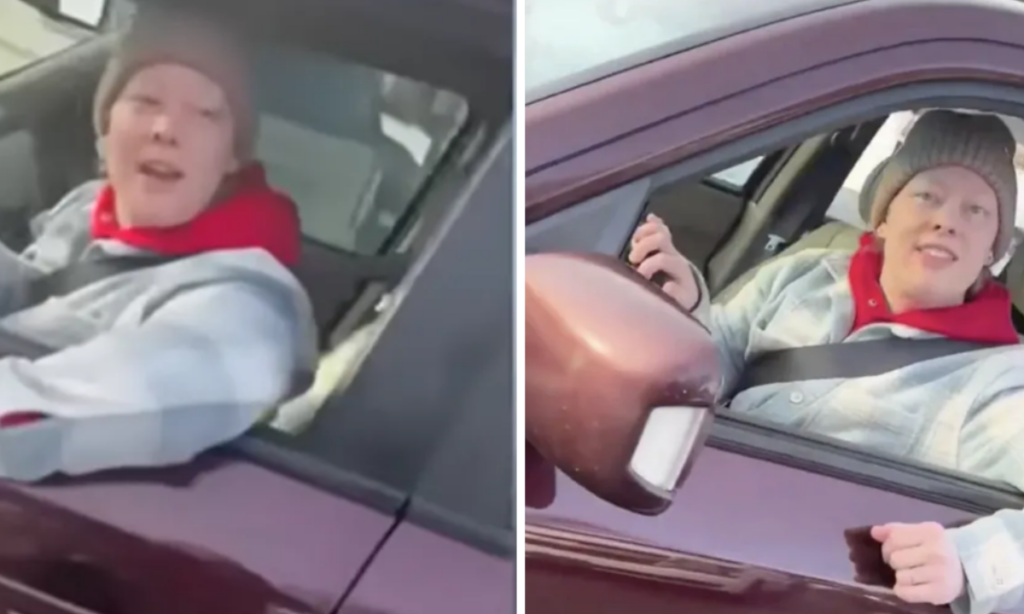
Renee Good’s Apparent Final Words and Moments Before Fatal ICE Shooting Captured in Agent’s Video
A brief cellphone recording, filmed on a snow-covered residential street in Minneapolis, captures a tense confrontation that unfolded in less than a minute but ended with fatal consequences.
The footage, first obtained and published by a news outlet, is shot from the perspective of a federal agent and documents a rapidly escalating exchange involving a maroon Honda Pilot, multiple bystanders, and intensifying commands.
The video lasts roughly 47 seconds, yet it offers one of the clearest visual records to emerge so far from a fatal encounter connected to an Immigration and Customs Enforcement operation.
Footage Begins
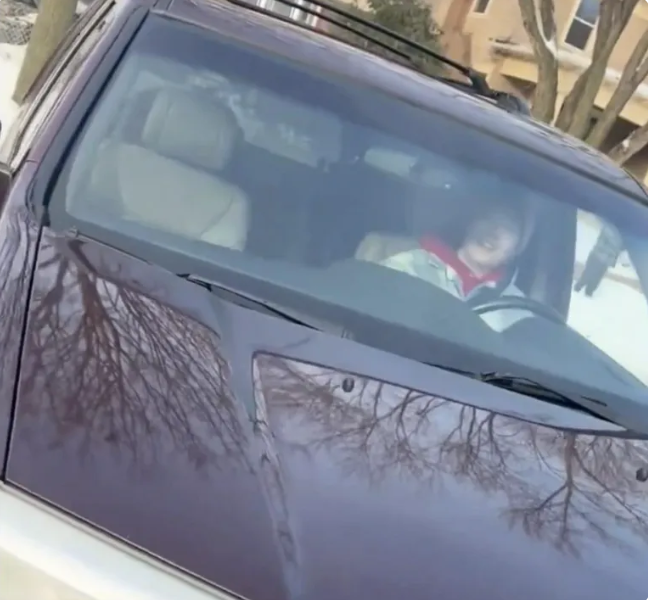
The clip opens with the camera fixed on the SUV parked along the curb of a quiet neighborhood lined with older homes, bare trees, and patches of snow. Other vehicles sit scattered along the street, while the agent filming slowly approaches the car, focusing on its windshield and hood.
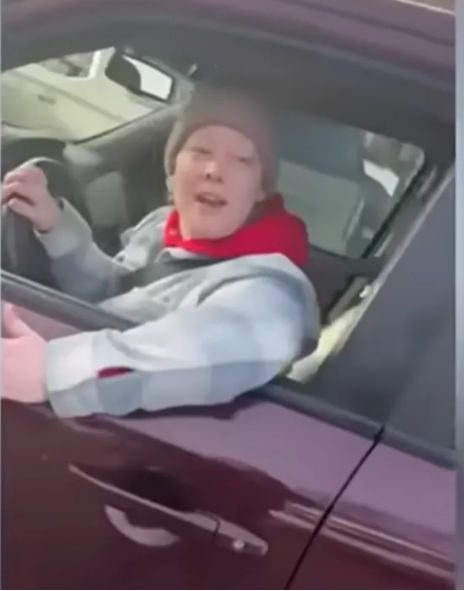
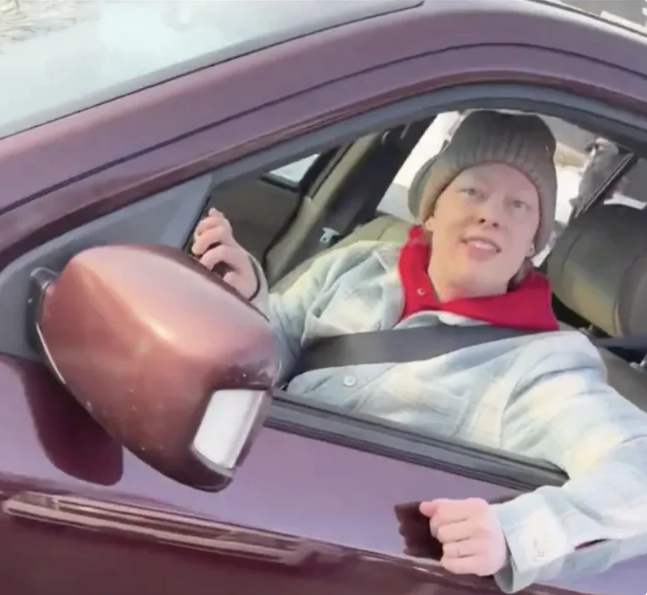
A dog can be seen looking out the window from inside the car. Inside the driver’s seat, a woman, now identified by authorities and family members as Renee Good, becomes visible. She wears a dark-colored hat and a red cloth underneath a light-colored jacket. At first, she looks directly toward the agent and smiles as she gestures with her hands.
A Tense Exchange
At that moment, Good is heard speaking calmly but pointedly to the agent, “That’s fine, dude, I’m not mad at you.” As the agent moves toward the back of the SUV, she continues, adding, “Big boy, show your face.”
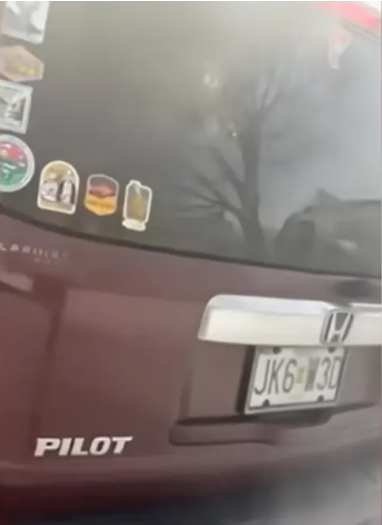
The agent continues filming, zooming in on the rear of the Honda Pilot. The camera lingers on the taillights, the “Pilot” badge, and a Minnesota license plate. Several bumper stickers, some appearing to reference outdoor or park themes, are visible in the close-up shots.
Another woman, who appears behind the vehicle and seems to be recording on her own phone, joins in. In a sarcastic tone, she says, “That’s okay, we don’t change our plates every morning, just so you know it’ll be the same plate when you come talk to us later, that’s fine.”
As the agent walked away from the vehicle, the same woman recording added, “You want to come at us? I said go get yourself some lunch, big boy.”
Sudden Escalation
Moments later, the camera pans up the street, briefly capturing a wider scene: several people in winter coats farther away, and a dark gray sedan at an angle farther up the road. From that direction, another agent can be heard shouting, “Get out of the car. Get out of the [expletive] car.”
The view abruptly returns to the maroon SUV. As the confrontation intensifies, the woman recording outside approaches the driver’s door. Almost immediately afterward, the SUV begins to move. A loud crashing sound follows, then two gunshots ring out.
The footage ends with quick, disjointed images of the vehicle’s side and front, minor scuff marks on the bumper, and the now-emptier stretch of street ahead. No further dialogue is captured, only ambient noise and distant movement.
Family Statement Emerges
In the days following the shooting, Good’s wife, Becca Good, released her first public statement, offering insight into who the deceased was beyond the final moments captured on video. In remarks shared with MPR News, Good’s wife described her as a 37-year-old poet and mother of three whose presence radiated warmth.
“She literally sparkled,” the grieving wife said in a statement. “I mean, she didn’t wear glitter but I swear she had sparkles coming out of her pores. All the time.”
She said that behind that light was a set of deeply held values that guided her wife’s life, including a belief that compassion should extend to everyone, adding:
“Renee was a Christian who knew that all religions teach the same essential truth: we are here to love each other, care for each other, and keep each other safe and whole.”
Why They Were There
Those convictions, she explained, were what led the couple to stop during the ICE operation in south Minneapolis on January 7th, even though they were relatively new to the area. “We had whistles,” she said. “They had guns.”
Continuing Controversy
As investigations continue, the recording has become central to public debate, raising urgent questions about the seconds that preceded the gunfire and the words exchanged just before the confrontation turned deadly.
As the video documenting the moments leading up to Good’s death continues to circulate and raise questions, federal officials have since issued their own account of the shooting, an explanation that has sparked sharp pushback from Minneapolis leaders, community members, and Good’s family.
The Department of Homeland Security has characterized Good as a “domestic terrorist” who “weaponized her vehicle” against officers. However, the video evidence—showing Good smiling, speaking calmly, and engaging in what appears to be verbal protest rather than violent action—has led many to question this characterization.
Minneapolis Mayor Jacob Frey has called the federal self-defense claim “bulls—,” while Minnesota Governor Tim Walz described the government’s explanation as “propaganda.”
A Life Remembered
Good’s mother, Donna Ganger, told reporters her daughter was “one of the kindest people I’ve ever known” and “extremely compassionate.” She rejected the federal characterization entirely, saying Good was “probably terrified” in those final moments.
The 37-year-old was a U.S. citizen, born in Colorado, with no criminal record beyond a traffic citation. She was a published poet who graduated from Old Dominion University with a degree in English and creative writing, winning the school’s undergraduate poetry prize.
She left behind a 6-year-old son who is now an orphan—his father, comedian Tim Macklin Jr., died in 2023, also at age 37.
Unanswered Questions
The agent-filmed video, combined with multiple bystander recordings, provides an unprecedented look at the moments before Good’s death. Yet fundamental questions remain: Why did the situation escalate so rapidly? Was lethal force necessary? Could de-escalation techniques have prevented this tragedy?
As federal and local investigations continue, Good’s final words “That’s fine, dude, I’m not mad at you”
and her smile in those opening moments of the video stand in stark contrast to the violent conclusion that would follow less than a minute later.
The footage has become a focal point for those demanding accountability and transparency in federal immigration enforcement operations, while also serving as a painful reminder of a life cut short and a family forever changed