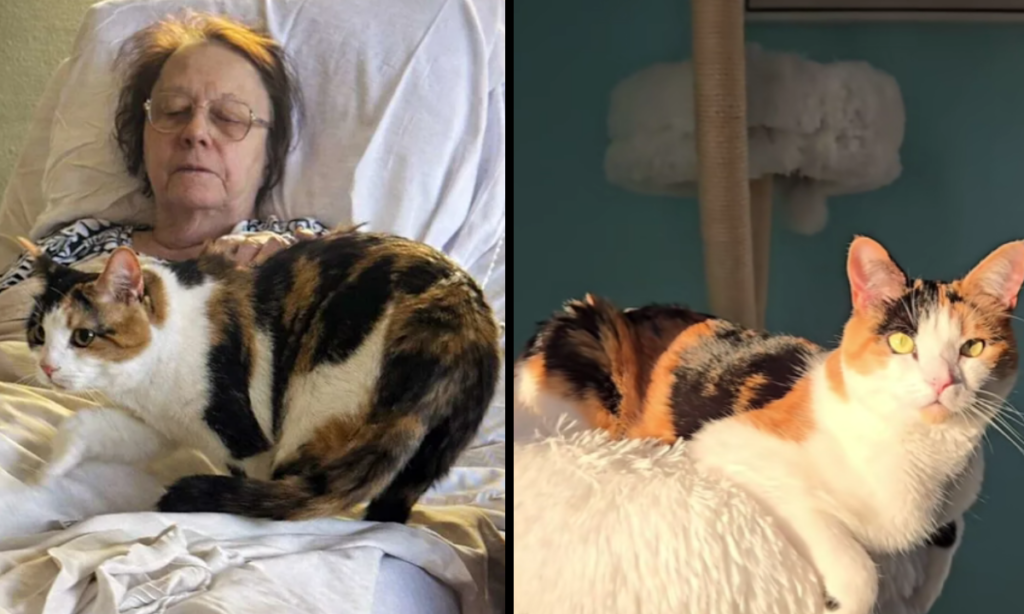
Heartbroken Cat Goes Searching for Dead Owner, as Daughter Shares Details of Their Shared Grief
After her mother’s death, Christina Olivo took in her mom’s beloved cat Maggie, and found herself moving through grief alongside her in ways she never expected
After her mother’s death, Christina Olivo made the immediate decision to take in her mom’s cat, Maggie
As they adjusted to life together, Olivo began to recognize her own grief reflected in Maggie’s behaviorA quiet moment between them revealed how love and loss can be shared across species
The quietest moments of grief do not always arrive with tears or words, but sometimes with a pause—a cat lingering in a familiar place, searching for someone who is no longer there.
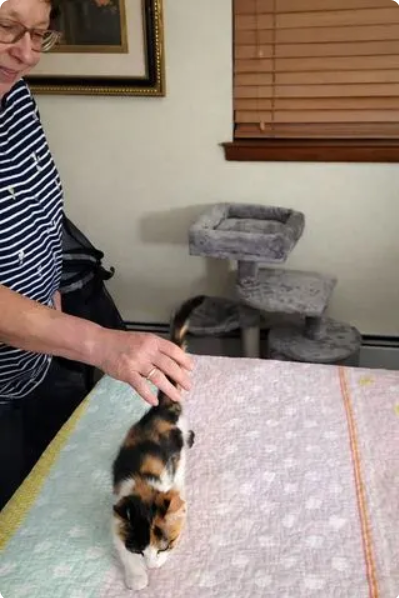
A Moment Captured
That is the moment Christina Olivo captured when she filmed her late mother’s cat, Maggie, rubbing against and sniffing a chair that once belonged to her. In the now widely shared TikTok, Maggie returns to the chair Olivo’s mother loved most, her movements gentle and deliberate.
“We were grieving, and everything felt uncertain, but taking in Maggie felt non-negotiable,” Olivo says, explaining that caring for her mom’s cat felt like an extension of love rather than a decision.
The video’s text overlay reads, “I took in my mom’s cat Maggie after mom’s passing last year. This was mom’s favorite chair. grief is hard on all of mom’s daughters.” Many TikTok users saw their own experiences reflected in the quiet moment, recognizing grief in its most unspoken form.
A Choice Rooted in Experience
Olivo, 42, says the choice to take Maggie in was shaped by both love and lived experience. She and her twin sister, Anna Olivo, volunteer as cat adoption counselors at the SPCA Westchester in Briarcliff Manor, N.Y.
“My twin sister and I regularly see family members bring in the cats of a loved one who has passed rather than keep them within the family,” Olivo says. When the moment came for their own family, she says they knew they had to step up.
For Olivo, Maggie represented far more than a pet left behind. “She represented continuity, comfort and a living connection to mom,” she says, adding that caring for her gave the family a sense of purpose during a time of deep loss.
A Special Bond
That connection was rooted in a long and loving bond between Maggie and Olivo’s mother. Maggie entered their lives as a kitten, brought home by Olivo’s brother, and quickly became a constant presence.
“My mom had a very special bond with Maggie from the moment she came home,” Olivo says. During years marked by health struggles, Maggie’s playful energy brought laughter back into her mother’s daily life.
The Significance of the Chair
The chair featured in the video also carries layers of meaning. Olivo says the family bought it so her mom would have a comfortable, familiar place to sit when she split her time between Florida and New York.
The chair became where her mom rested, watched Maggie play and shared quiet moments that now feel especially precious.
A Final Goodbye
Even in her mother’s final days, Maggie remained close. Olivo recalls that the family was able to bring Maggie to the hospital in a stroller so she could say goodbye. “My mom loved watching her race around the room and then eventually curl up with her,” Olivo says.
Those memories came rushing back when Maggie returned to the chair after her death. Watching it unfold was emotional for Olivo in ways she didn’t anticipate.
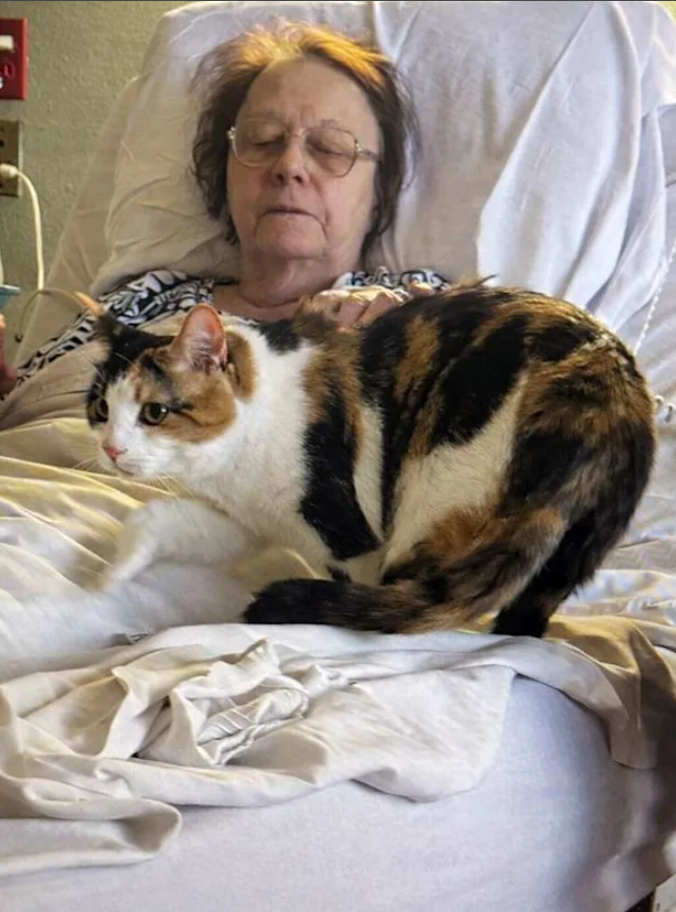
“Seeing Maggie drawn to my mom’s chair was incredibly emotional,” she says. “It felt like my mom’s presence was still there in some quiet way.”
The moment carried both comfort and heartbreak. Olivo says watching Maggie linger reminded her how deeply loved the cat had been, and how strong that bond remained.
Shared Grief
“We were very much a unit with our mom, and losing her felt like losing a piece of ourselves,” she says. Caring for Maggie became a way of acknowledging that shared pain rather than avoiding it.
In caring for Maggie, Olivo began to see grief reflected back at her. “If we felt that loss so intensely, it was a reminder that Maggie must have felt it too,” she says.
That realization reframed how Olivo understood grief, not just as an emotional experience but as something that shows up in behavior and routine.
An Unexpected Response
Olivo did not expect to share the moment publicly, nor did she anticipate the response it would receive. The video was originally meant to document something personal and true. “I didn’t share the video with the expectation that it would reach so many people,” she says. “I was really just capturing a quiet, meaningful moment that felt true to our experience of grief.”
As someone who works in animal welfare, Olivo says she has long been aware of how deeply pets are affected by loss. Sharing the video felt like a way to acknowledge that reality in an honest way.
A Community of Grief
The response, she says, was overwhelming. Messages poured in from strangers who recognized their own grief in Maggie’s behavior. “Hearing from strangers who were grieving similar losses meant a lot,” Olivo says. “It reminded me that so many people are carrying quiet losses we may never know about.”
Many shared stories of taking in a loved one’s pet after a death, offering comfort through shared experience. For Olivo, those messages were a reminder of the compassion that exists even in moments of sadness.
“Seeing how many people shared that they had done the same for a family member or a loved pet was deeply comforting,” she says.
The Reality of Pet Grief
Through her work at SPCA Westchester, Olivo has witnessed countless families face the difficult decision of what to do with a deceased loved one’s pet. Too often, she says, pets are surrendered to shelters during what may be the most traumatic period of their lives losing not just their owner but their entire familiar world.
Her professional experience made the decision to keep Maggie feel even more important. “We see it all the time pets who’ve lost their person, confused and grieving, brought to a shelter by family members who can’t or won’t take them in,” she explains. “I couldn’t let that happen to Maggie.”
Understanding Animal Grief
Scientists have increasingly recognized that many animals, particularly cats and dogs, experience grief when separated from their bonded humans. They may search for their person, change their eating or sleeping patterns, vocalize more, or become withdrawn.
Maggie’s behavior returning repeatedly to her late owner’s favorite chair, sniffing and rubbing against it—represents classic signs of animal grief. She was searching for the familiar scent, the comforting presence, the routine that had defined her life.
“Watching Maggie search for my mom in the places where they spent time together was heartbreaking,” Olivo says. “But it also validated what we were feeling. We were all looking for her in different ways.”
Grief as a Shared Language
What makes Olivo’s story particularly moving is how she came to see her grief and Maggie’s as intertwined rather than separate. “We were grieving together,” she says. “Not in the same way, but in ways that recognized each other’s pain.”
This recognition transformed caring for Maggie from an obligation into a form of mutual support. When Olivo felt overwhelmed by loss, Maggie’s presence provided comfort. When Maggie searched for her mother, Olivo was there to offer reassurance, even if she couldn’t bring back the person they both missed.
The Video’s Impact
@thextinanyc brb, crying 😢 #grief #griefjourney #loss #catsoftiktok #catmom ♬ marjorie – Taylor Swift
The TikTok video resonated so deeply because it captured something universally understood but rarely discussed: animals grieve, and that grief deserves acknowledgment and respect.
Comments flooded in from people who had taken in their grandmother’s cat, their father’s dog, their aunt’s bird all sharing the experience of navigating loss alongside an animal who couldn’t understand death but felt the absence nonetheless.
“People told me stories about their own pets mourning, about how they’d never really thought about animal grief before, about how the video helped them feel less alone,” Olivo says. “That was never my intention, but I’m grateful it connected with people that way.”
Moving Forward Together
As Maggie adjusts to life without her original owner, Olivo says she continues to see moments of searching and remembering. But she also sees adaptation, new routines forming, and bonds developing between Maggie and her new family.
“She still goes to the chair,” Olivo says. “But she’s also learned that this is her home now, that we love her, that she’s safe.”
For Olivo, caring for Maggie has become part of how she processes her mother’s death. “When I feed Maggie, when I play with her, when I see her contentedly sleeping all of those moments feel like I’m honoring my mom’s love for her.”
A Reminder About Pet Planning
Olivo’s story also serves as a reminder about the importance of planning for pets in the event of an owner’s death. She encourages people to have explicit conversations with family members about who would care for their animals, to include pets in estate planning, and to ensure loved ones know their wishes.
“Too many pets end up in shelters after their owner dies because no one knew what to do or felt prepared to take them in,” she says. “Having those conversations in advance can make such a difference.”
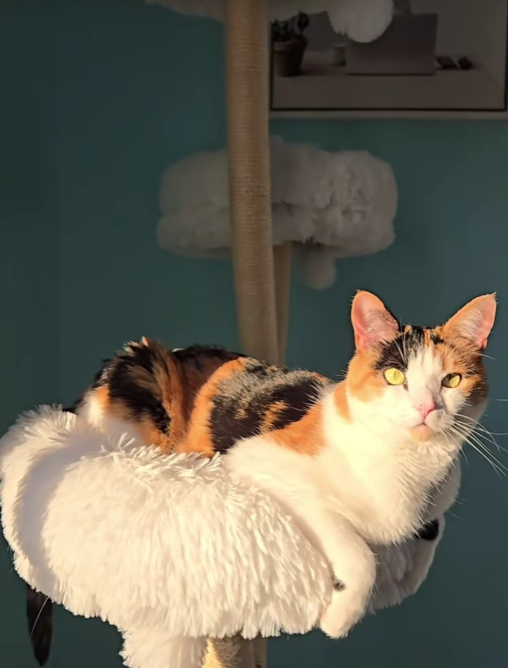
The Healing Power of Responsibility
Unexpectedly, caring for Maggie has provided structure and purpose during the chaotic early months of grief. “There were days when I didn’t want to get out of bed, but Maggie needed to be fed,” Olivo says. “That responsibility, as simple as it sounds, helped me keep going.”
The daily routines of pet care—feeding, playing, cleaning the litter box created continuity when everything else felt fractured. And watching Maggie gradually adjust to her new life offered hope that healing, though slow, was possible.
Love That Transcends Loss
Ultimately, Maggie’s story is about love that persists beyond death. The bond between Olivo’s mother and her cat didn’t end when her mother passed away it transformed, continuing through Olivo’s decision to honor that relationship by caring for Maggie herself.
“My mom loved Maggie so much,” Olivo says. “Taking care of her is one way I can still show love to my mom, even though she’s gone.”
That simple truth that love finds ways to continue resonates in the quiet moments when Maggie returns to the chair, searching for someone who will never sit there again, but finding instead a daughter who understands that some absences never fully fade, only become part of who we are and how we love.