Federal Agents Remove Driver Blocking ICE Operation as Minneapolis Protests Intensify
Dramatic confrontation captured on video shows escalating tensions between immigration enforcement and demonstrators in Minnesota
Critical Developments:
- Woman forcibly extracted from vehicle after allegedly obstructing federal immigration operation
- At least 60 protesters arrested during Tuesday’s demonstration in Minneapolis
- Incident occurs amid ongoing protests following fatal shooting one week earlier
Confrontation Unfolds on Minneapolis Streets
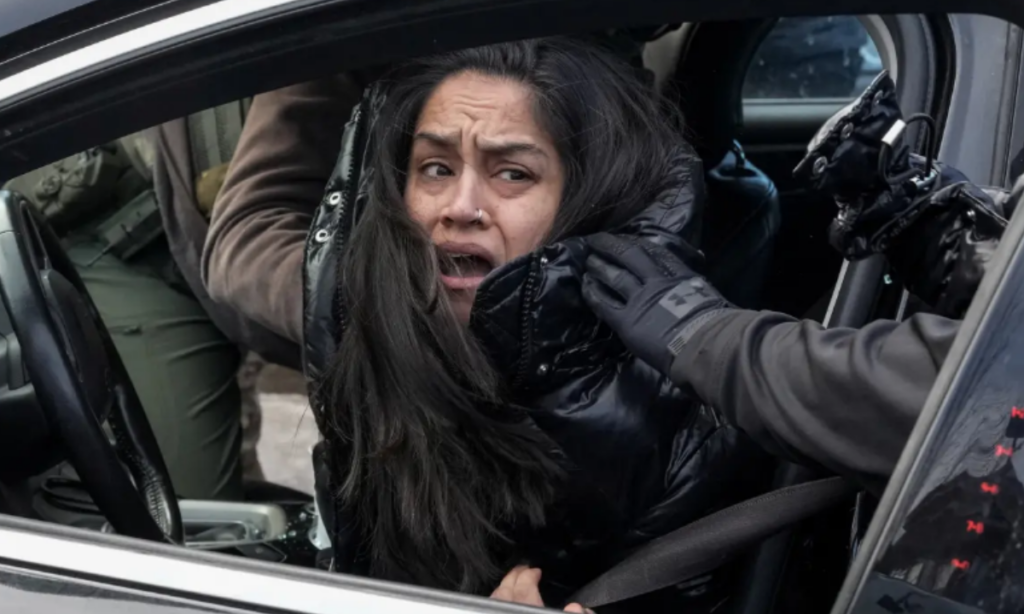
Video documentation captured a chaotic Tuesday scene when federal immigration agents removed an unidentified woman from her vehicle after she positioned it across traffic lanes, apparently blocking ICE vehicles during an anti-enforcement demonstration in Minneapolis.
The footage shows agents attempting to clear streets of vocal protesters when they approached the female driver, who appeared to be wedging agents between her vehicle and another car obstructing the roadway.
Forcible Vehicle Entry
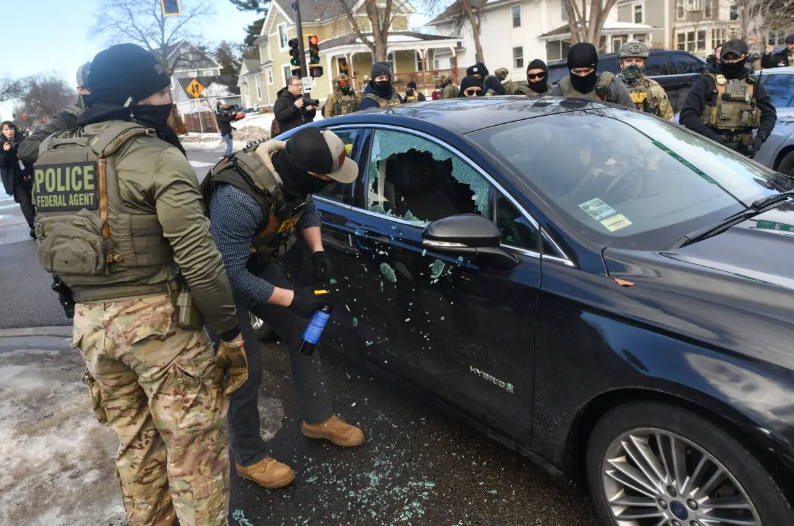
Agents proceeded to break through the car’s passenger window as surrounding individuals shouted “Go, go, go, go” at the driver.
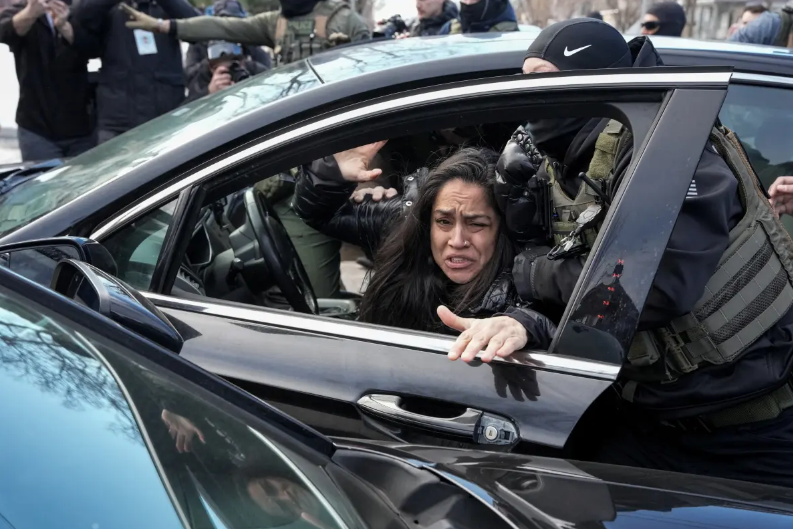
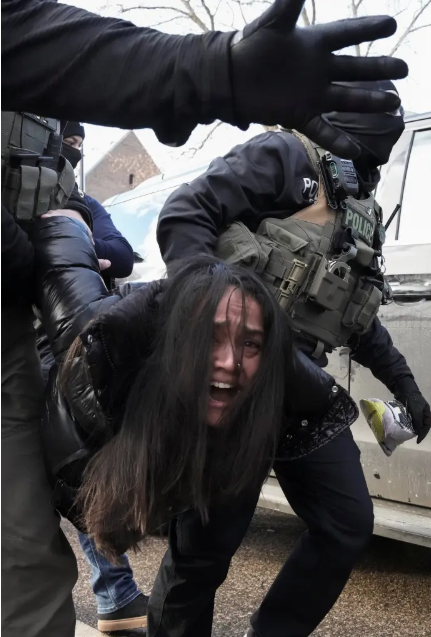
One Enforcement and Removal Operations (ERO) agent leaned into the black sedan, apparently unlocking the driver’s door before opening it, enabling another agent to physically remove the woman from the vehicle.
Street protesters activated whistles attempting to halt the agents, shouting “Stop,” “That’s so messed up” and “All you do is hurt.”
Crowd Response and Chemical Agents
Minutes afterward, protesters wearing black hoodies and gas masks were observed striking federal agents’ vehicles as tear gas, pepper balls and pepper spray were deployed attempting to control the agitated crowd.
“Nazis,” one demonstrator shouted. “You will pay for your crimes.”
Official Arrest Numbers
ICE ERO Acting Executive Associate Director Marcos Charles informed Fox News that officials arrested at least 60 protesters who had “impeded us or assaulted an officer.”
Presidential Response
President Trump warned Minnesotans that “a day of reckoning was coming” after his administration faced legal action regarding continuing ICE operations throughout the state.
“Every location we operate, crime decreases. In Chicago, despite a weak and incompetent Governor and Mayor fighting us completely, significant improvement was achieved. Thousands of Criminals were removed!” Trump posted on Truth Social.
“Minnesota Democrats love the unrest that anarchists and professional agitators are causing,” the president stated.
“FEAR NOT, GREAT PEOPLE OF MINNESOTA, THE DAY OF RECKONING & RETRIBUTION IS COMING!”
Ongoing Protest Context
Chaotic demonstrations have expanded across Minnesota following the January 7th death of anti-ICE demonstrator Renee Nicole Good. Police estimate “tens of thousands” of demonstrators have attended rallies and street marches opposing ICE’s continued presence in the Twin Cities.
Good, 37, was in her vehicle, allegedly blocking traffic on a Minneapolis residential street while waiting for ICE agents to pass through.
Escalating Tensions
The Tuesday incident represents the latest confrontation in intensifying clashes between federal immigration enforcement operations and local resistance efforts. The forcible vehicle extraction, deployment of chemical crowd control agents, and mass arrests signal escalating tensions between authorities and demonstrators.
The protests reflect broader opposition to expanded immigration enforcement activities that have generated controversy across multiple jurisdictions, with Minnesota emerging as a particular flashpoint for confrontations between federal agents and local communities.
Legal and Political Implications
The administration’s warning of “reckoning and retribution” alongside ongoing legal challenges creates uncertain terrain for future enforcement operations. Minnesota officials face pressure balancing federal immigration authority against constituent concerns about enforcement tactics and community impact.
The dramatic video footage circulating online has intensified public debate regarding appropriate enforcement methods, protester tactics, and the broader question of federal immigration policy implementation in resistant jurisdictions.
As demonstrations continue with estimated tens of thousands participating, Minnesota appears positioned to remain a central battleground in national debates over immigration enforcement, federal authority, and community resistance—with both sides showing little indication of backing down from increasingly confrontational stances.